
Explore How Food Delivery Has Changed in the UK
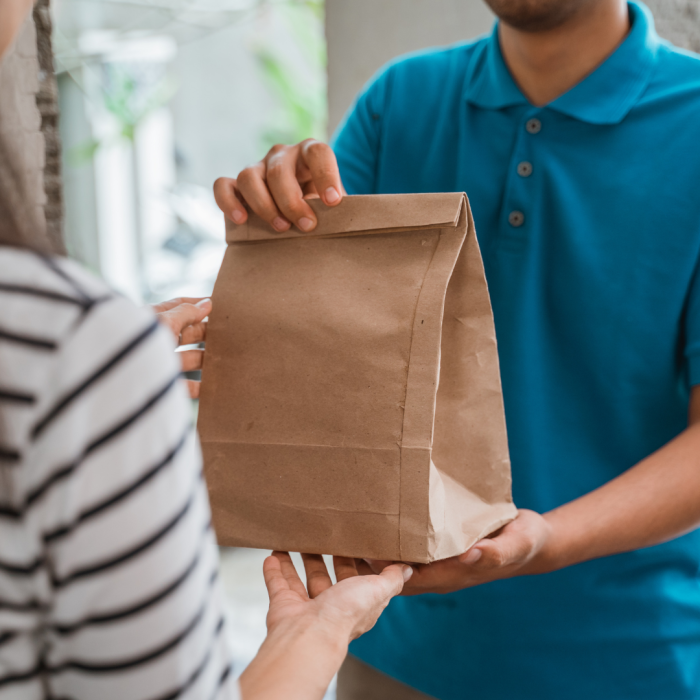
Food delivery in the UK has transformed dramatically over the years, moving from a simple convenience to a modern-day necessity, shaped by changing consumer habits, technological advances, and an ever-growing focus on sustainability. At the heart of this transformation lies not only the logistics of delivering food to our doorsteps but also the evolution of the packaging that houses our meals.
The History of Food Delivery
The origins of food delivery in the UK can be traced back to the 1950s, when takeaways became popular after World War II. At the time, fish and chips dominated the delivery scene, with local restaurants offering basic services to nearby customers. However, it was in the 1980s and 1990s that food delivery in the UK expanded to include more diverse options, with Indian, Chinese, and pizza takeaways becoming essential staples in British culture.
The rise of the internet in the early 2000s marked a major leap in food delivery. Platforms like Just Eat, launched in 2001, revolutionised the industry by creating a marketplace that connected customers with restaurants via online orders. In 2024, Just Eat had captured 45% of the UK’s delivery market share, solidifying its dominance. Meanwhile, Deliveroo (27%) and Uber Eats (27%) have become prominent competitors, offering customers a wide range of fast food and gourmet meals at their fingertips.
The Evolution of Food Delivery
The COVID-19 pandemic further accelerated the food delivery industry’s growth, as people increasingly relied on delivery services during lockdowns. Between February 2020 and February 2021, food delivery spending in the UK surged by 128%, with Deliveroo, Uber Eats, and Just Eat leading the charge.
Over the past decade, the UK food delivery sector has seen exponential growth, thanks to the convenience of accessing meals from thousands of restaurants in minutes. Yet, behind every delivery lies an often-overlooked factor: packaging. In its early days, food delivery primarily relied on plastic and Styrofoam containers—materials that, while functional, have significant environmental drawbacks. With growing environmental awareness, businesses are now transitioning to sustainable alternatives, such as cardboard, biodegradable plastics, and compostable materials, as consumers increasingly demand eco-friendly solutions.
A Closer Look at Takeaway Containers
Let’s explore the different types of packaging that have emerged alongside the evolving delivery industry.
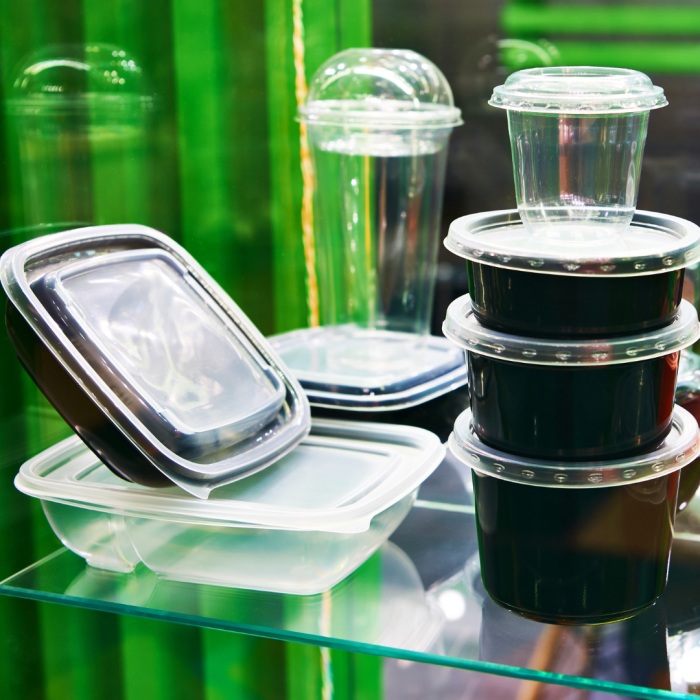
Plastic Cutlery, Cups and Containers
Plastic has long been the go-to material for takeaway containers. It’s durable, cheap to produce, and capable of handling all kinds of food, from hot soups to cold salads. Plastic cutlery and cups are also widely used for convenience, particularly in fast food and casual dining.
However, the environmental downside of plastic is undeniable. A report by Greenpeace found that more than 12 million tonnes of plastic enter our oceans every year, with a large portion of it coming from food packaging. These plastics take hundreds of years to decompose, contributing to the global waste crisis. While some plastics are recyclable, many takeaway containers end up in landfills due to contamination or a lack of proper facilities.
Cardboard and Paper Packaging
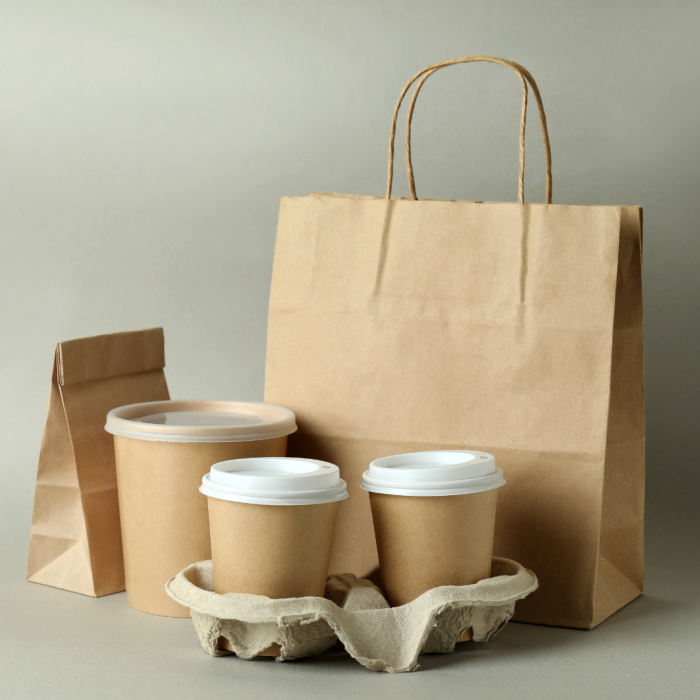
In recent years, cardboard and paper alternatives have grown in popularity. Not only are they biodegradable, but they’re also widely recyclable, making them an eco-friendlier choice. From pizza boxes to sandwich wrappers, cardboard has become a versatile option for many food outlets. Paper-based cups and straws have also become common, replacing their plastic counterparts.
One of the key benefits of cardboard packaging is its sustainability. Unlike plastic, cardboard breaks down naturally, reducing its environmental impact. For businesses, this shift is a smart way to appeal to eco-conscious consumers who prefer greener packaging options.
Biodegradable and Compostable Containers
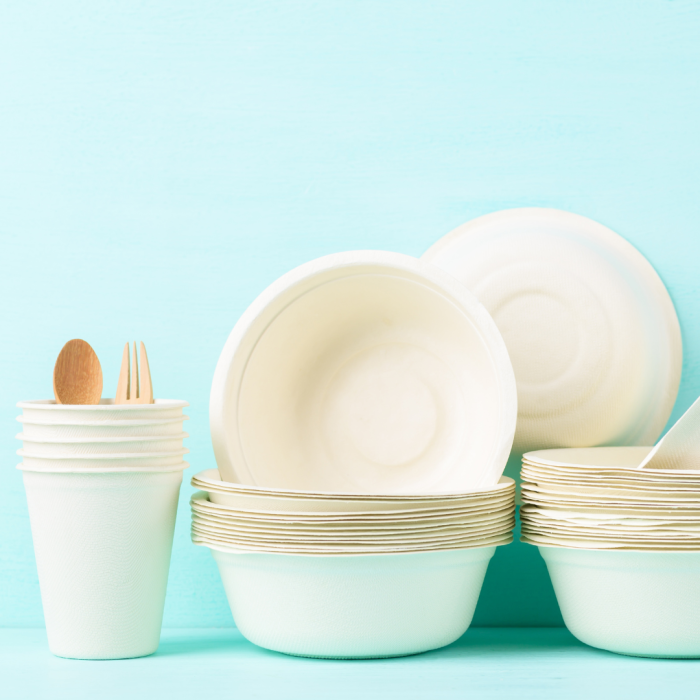
As sustainability becomes more central to the food delivery industry, biodegradable and compostable containers have emerged as a leading innovation. These containers are made from materials like cornstarch, Kraft & bagasse (sugarcane fibre), and PLA (a biodegradable plastic derived from renewable resources).
Unlike traditional plastic, compostable containers can break down in a matter of months, under the right conditions. This makes them a compelling choice for environmentally conscious restaurants and takeaway outlets looking to minimise their carbon footprint. Additionally, many of these materials are designed to be heat-resistant, durable, and just as functional as traditional plastic packaging.
The Push for Sustainable Packaging in the UK
Sustainability is no longer a trend, it’s a necessity. Consumers are becoming more aware of their environmental impact, and businesses that fail to adapt are quickly falling out of favour. In the UK, this shift has been accelerated by legislation and consumer demand.
The UK government has introduced initiatives to combat plastic waste, including bans on plastic straws, stirrers, and cotton buds. This has pushed many businesses to reconsider their packaging choices, switching to more sustainable materials. Moreover, as part of the UK’s commitment to achieving net-zero emissions by 2050, reducing waste from single-use plastics is high on the agenda.
Restaurants and food outlets are increasingly expected to offer sustainable packaging as part of their service. According to a study by WRAP, nearly 70% of consumers now consider the environmental impact of food packaging when making purchasing decisions. This trend is only set to grow, with eco-consciousness becoming a key driver of brand loyalty.
The Role of Wholesalers in Supporting Sustainability
We understand the importance of providing a diverse range of packaging solutions that cater to both functionality and sustainability. Whether you’re looking for biodegradable containers, recyclable cups, or compostable cutlery, we’re committed to helping the hospitality and catering industry transition to eco-friendly alternatives.
Our range of catering disposables includes:
Plastic Containers: For businesses that still require durable, heat-resistant options, we offer a selection of recyclable plastic containers.
Cardboard and Paper Products: From paper cups to cardboard food trays, our sustainable paper products are designed to offer the same convenience while minimising environmental impact.
Compostable Packaging: Perfect for businesses looking to offer fully biodegradable options, our compostable containers and cutlery are made from renewable materials.
Comments are closed here.